
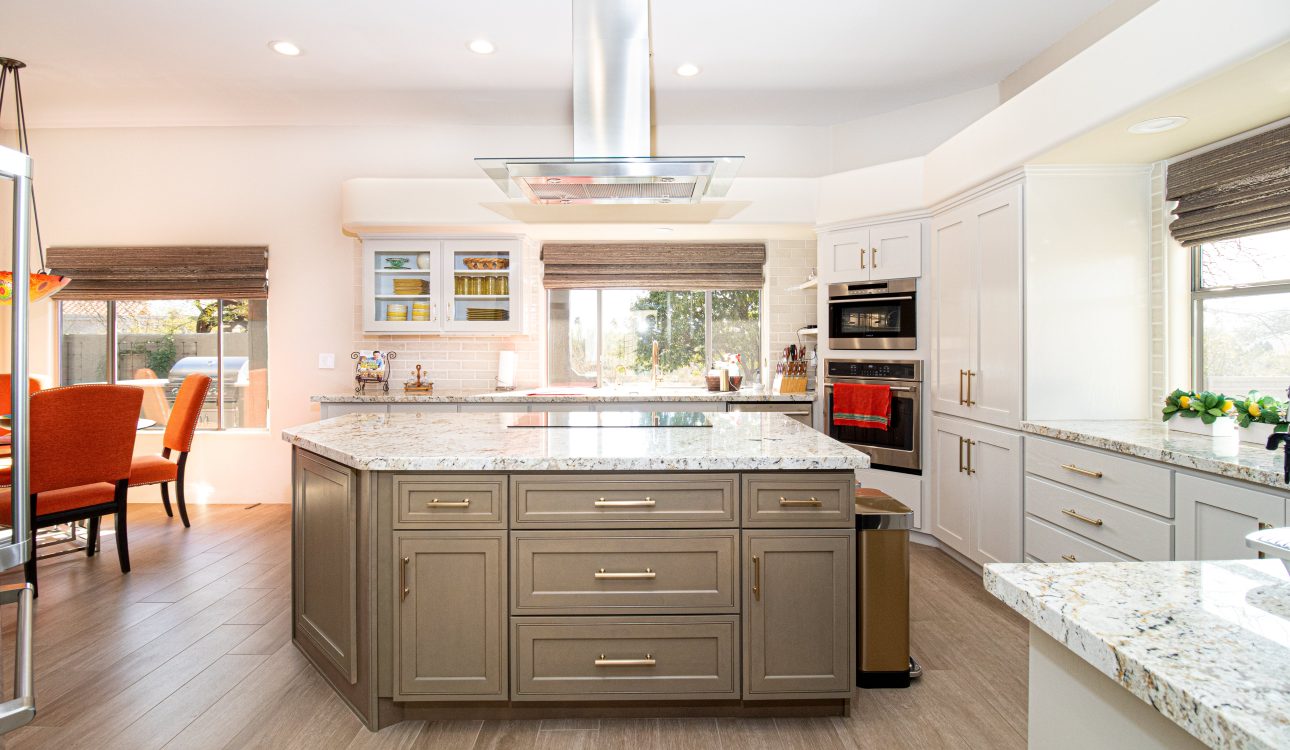
Plywood cabinets are generally a better choice for kitchen cabinet boxes when moisture resistance, structural strength, and long-term durability are priorities. MDF, however, can be an excellent option for painted cabinet doors and decorative panels because its smooth, uniform surface produces a consistent finish. The right material depends on where we use it, how the cabinets are constructed, and the conditions they will face every day.
When homeowners compare custom cabinets in Smyrna, TN, we encourage them to look beyond color and door style. The material inside the cabinet matters just as much as the finish outside. A beautiful kitchen can become frustrating if cabinet shelves sag, doors swell, or hardware starts loosening after regular use.
At Remodel View of Nashville, we consider cabinet construction, material thickness, joinery, hardware, and the intended finish before recommending a particular combination. Understanding the differences between plywood and MDF helps us create cabinetry that fits both the design and the practical demands of a household.
What Is the Difference Between Plywood and MDF Cabinets?
Plywood is made from thin layers of wood veneer bonded together, while MDF (medium-density fiberboard) is manufactured from wood fibers combined with resin and compressed into dense, uniform panels.
These manufacturing methods give the materials different characteristics.
Plywood has a layered structure with alternating grain directions. This construction helps distribute loads and provides good screw-holding strength, making it a popular choice for cabinet boxes, shelving, and structural components.
MDF has a consistent composition throughout the panel. It does not have natural wood grain or knots, so its surface is smooth and predictable. This makes it particularly useful for painted cabinet doors, decorative profiles, and panels that require a uniform appearance.
Neither material is automatically better for every cabinet component. We evaluate the application before selecting one.
Are Plywood Cabinets More Durable Than MDF Cabinets?
Plywood generally offers better structural durability for cabinet boxes, particularly in kitchens where shelves, fasteners, and cabinet connections experience repeated use.
Kitchen cabinets support considerable weight. Plates, cookware, small appliances, pantry items, and cleaning supplies all place pressure on shelves and cabinet joints.
Plywood performs well in these applications because its layered construction provides strength and good fastener retention. It also tends to hold screws securely when hinges, drawer slides, and other hardware are installed correctly.
MDF can perform well in applications where structural loads are moderate and the material is properly supported. However, it is generally more vulnerable to damage from moisture and edge impacts.
When we design custom cabinets in Smyrna, TN, we consider how each cabinet will be used rather than assuming that one material should be used throughout the entire kitchen.
How Do Plywood and MDF Compare in Moisture Resistance?
Plywood generally handles occasional moisture exposure better than standard MDF, although neither material is waterproof.
This distinction is particularly important in kitchens and bathrooms. Cabinet areas near sinks, dishwashers, plumbing connections, and exterior walls can experience humidity, condensation, or accidental water leaks.
When moisture reaches MDF, the fibers can absorb water and swell. Once the panel has significantly expanded, it may not return to its original dimensions after drying.
Plywood can also absorb moisture, and prolonged exposure may cause veneer separation, swelling, or deterioration. However, its layered construction generally gives it an advantage in applications where occasional humidity is expected.
| Feature | Plywood | MDF |
|---|---|---|
| Moisture resistance | Generally better | Lower with standard MDF |
| Structural strength | Good | Moderate |
| Screw holding | Generally stronger | More limited, especially near edges |
| Surface consistency | Natural veneer variations | Smooth and uniform |
| Edge durability | Generally better | More vulnerable to chipping |
| Weight | Varies by construction and thickness | Generally heavier than comparable plywood |
| Painted finish | Good with proper preparation | Excellent |
| Repairability | Often easier to repair | Damaged areas can be difficult to repair |
Moisture-resistant MDF formulations are available, but they should not be treated as waterproof materials. Proper installation, sealing, ventilation, and plumbing maintenance remain important regardless of the cabinet material.
Is MDF Better for Painted Kitchen Cabinet Doors?
Yes, MDF is often an excellent choice for painted cabinet doors because its smooth surface creates a consistent finish without visible wood grain.
This is especially useful for Shaker-style doors, contemporary flat panels, and decorative cabinet fronts. MDF does not have the natural grain variations found in solid wood or plywood, so painted surfaces can look more uniform.
Another advantage is dimensional stability. MDF is less prone to certain types of wood movement caused by changes in humidity, although moisture exposure can still cause swelling.
For custom cabinets in Smyrna, TN, we consider MDF when homeowners prefer a smooth painted appearance and the application does not expose the material to excessive moisture or physical impact.
Plywood can also be used for cabinet doors, particularly when a natural wood appearance is desired. The choice often comes down to the intended finish and construction method.
Which Material Holds Screws and Cabinet Hardware Better?
Plywood generally provides better screw-holding performance than MDF, particularly when fasteners are installed into properly constructed cabinet panels.
This matters because kitchen cabinets contain multiple moving components. Hinges open and close thousands of times, drawer slides support repeated movement, and cabinet connections must remain secure.
MDF can hold hardware when the correct fasteners and installation techniques are used. However, repeated stress near panel edges can cause the material to loosen, split, or deteriorate.
We also pay attention to the thickness of the panels, the type of screws, and the hardware mounting locations. Material selection alone cannot compensate for poor cabinet construction.
Does Plywood Always Make Better Cabinets?
No. Plywood is not automatically the best choice for every part of a kitchen cabinet.
The quality of the finished cabinet depends on several factors:
- Panel thickness and grade.
- Quality of adhesives and veneer layers.
- Cabinet joinery and assembly methods.
- Hardware quality and mounting techniques.
- Surface finishing and edge protection.
- Installation accuracy and cabinet support.
A poorly constructed plywood cabinet can perform worse than a properly manufactured MDF cabinet used in an appropriate application.
We look at the complete construction rather than choosing materials based on a single specification.
Can Plywood and MDF Be Used Together in One Kitchen?
Yes. Combining plywood and MDF can provide a practical balance of structural performance, appearance, and design flexibility.
For example, a kitchen may use plywood for cabinet boxes and shelves while using MDF for painted cabinet doors and decorative panels.
This combination allows us to use each material where its characteristics are most beneficial. Plywood supports the cabinet structure, while MDF provides a smooth surface for consistent painted finishes.
It is also possible to incorporate solid wood components for specific decorative details or design features.
At Remodel View of Nashville, we consider the entire kitchen layout, cabinet style, and finish requirements when determining which materials are appropriate for different components.

What Should Homeowners Consider Before Choosing Cabinet Materials?
Homeowners should consider their kitchen environment, storage needs, preferred appearance, and expected maintenance before selecting plywood or MDF.
A busy family kitchen with heavy cookware and frequent daily use may benefit from plywood cabinet boxes and durable hardware. A kitchen focused on smooth painted finishes may benefit from MDF doors combined with a suitable structural material.
We recommend evaluating these factors before making a final decision:
1. Kitchen environment
Areas near sinks, dishwashers, and plumbing require particular attention to moisture protection.
2. Cabinet construction
Panel thickness, joinery, reinforcement, and hardware attachment all influence long-term performance.
3. Door design
Painted Shaker doors, decorative profiles, and flat panels may benefit from MDF construction.
4. Storage requirements
Heavy cookware, appliances, and pantry supplies require appropriately supported shelves and cabinet boxes.
5. Overall design
The desired color, texture, grain pattern, and finish influence the materials we select.
When homeowners ask us about custom cabinets in Smyrna, TN, we explain these considerations before finalizing the cabinet design.
How Does Cabinet Material Affect Installation?
Cabinet material affects handling, fastening, cutting, and installation requirements, so we account for these differences during project planning.
Plywood and MDF can differ in weight, edge behavior, and fastener requirements. MDF panels can also produce considerable fine dust during cutting, which requires appropriate dust-control measures.
Regardless of the selected material, accurate measurements and properly prepared walls and floors are essential. Even high-quality cabinets can develop alignment problems when the installation surface is uneven.
Our cabinet installation process includes several important stages:
- Measuring the kitchen and checking existing conditions.
- Planning cabinet placement, clearances, and appliance locations.
- Completing necessary demolition and preparing the installation area.
- Delivering the cabinetry and checking components before installation.
- Installing, leveling, securing, and aligning the cabinets.
- Adjusting doors, drawers, and hardware.
During installation, Remodel View of Nashville also considers how the cabinetry will meet countertops, backsplashes, appliances, and surrounding finishes.
When Should You Choose Plywood Instead of MDF?
Plywood is generally the stronger choice when we need structural cabinet components that must support significant weight or handle everyday mechanical stress.
MDF is often the better choice when we need a smooth, consistent surface for painted doors and decorative elements.
For many kitchens, using both materials makes more sense than choosing only one. We can match the material to the function of each component instead of compromising on either appearance or performance.
The best cabinet construction is not necessarily the one with the most expensive material. It is the one that uses suitable materials, appropriate hardware, and proper installation techniques throughout the project.
FAQ
Are plywood cabinets more expensive than MDF cabinets?
Plywood cabinets often cost more because of material and manufacturing differences. Actual pricing depends on panel grade, thickness, construction, finish, and hardware.
Do MDF cabinets swell when exposed to water?
Yes. Standard MDF absorbs moisture and can swell, particularly around exposed edges and damaged finishes.
Can MDF cabinets last 20 years?
Yes. Properly manufactured, installed, and maintained MDF cabinets can last many years, especially in areas without significant moisture exposure.
Are plywood cabinets waterproof?
No. Plywood generally tolerates occasional moisture better than standard MDF, but prolonged water exposure can still damage it.
Which material is better for Shaker cabinet doors?
MDF is often preferred for painted Shaker doors because it provides a smooth, uniform surface. Plywood and solid wood are also suitable depending on the desired appearance.
Can plywood and MDF be combined in one kitchen?
Yes. Using plywood for cabinet boxes and MDF for painted doors is a practical combination when the materials are properly selected and installed.
What matters more: cabinet material or construction quality?
Both matter. Even excellent materials can perform poorly when panel thickness, joinery, hardware, or installation quality is inadequate.
Custom Cabinet Installation in Nashville and Smyrna, TN
At Remodel View of Nashville, we help homeowners in Nashville, Smyrna, TN, and surrounding communities plan kitchen upgrades and custom cabinetry projects. Our services include cabinet delivery, demolition, and professional installation, with attention to material selection, layout, and the details that affect everyday use.
If you are planning custom cabinets in Smyrna, TN, our team can help you compare cabinet materials, choose practical construction options, and create a kitchen that works for your household. Call us at 513-790-2770 to discuss your project.