

The best time to replace stair trim is after the major demolition, drywall correction, and stair-surface decisions are complete, but before final caulking, painting, and touch-ups. The exact timing depends on whether the project includes new treads, risers, flooring, baseboards, or changes to the stair wall.
For homeowners planning stair trim in Smyrna, TN, sequencing matters because the trim has to fit the finished stair geometry, not the old one. At Remodel View of Nashville, we usually coordinate stair trim with flooring, drywall, and finish carpentry so the final joints are clean and the trim does not need to be removed twice.

Why Should Stair Trim Not Be Replaced Too Early?
Stair trim should not be installed before the dimensions around the staircase are settled. If demolition, drywall repair, or flooring replacement is still underway, the trim can end up too short, too high, or poorly aligned.
A skirt board that is fitted before new treads go in may no longer meet the finished tread edges correctly. The same problem can happen where stair trim meets baseboards at the top or bottom landing.
What Should Be Finished Before New Stair Trim Is Installed?
The major work that changes wall planes, stair dimensions, or floor height should be completed first. This gives us the actual finished conditions to work from.
Before installing stair trim in Smyrna, TN, we typically want these items resolved:
- Demolition of old carpet, trim, or damaged finishes
- Drywall repairs along the stair wall
- Final tread and riser selection
- Flooring height at the upper and lower landings
- Any stair framing corrections
- Baseboard profile and height
- Handrail or newel-post changes that affect the trim
Once those dimensions are known, the trim can be cut to fit the real project rather than an outdated condition.
Should Stair Trim Be Installed Before or After New Treads?
Usually after the tread and riser plan is established, but the exact installation sequence depends on the stair design. In some projects, skirt boards are installed before finish treads; in others, the trim is scribed around installed stair components.
The important point is coordination. We do not treat the skirt board, tread, and riser as three unrelated pieces because small errors can leave visible gaps along every step.
At Remodel View of Nashville, we choose the sequence based on the specific staircase rather than applying one method to every remodel.
What Happens When Carpet Is Replaced With Hardwood?
Replacing carpet with hardwood often changes the relationship between the stair surface and the existing trim. Carpet can hide gaps, rough cuts, fasteners, and uneven edges that become visible as soon as it is removed.
Hardwood treads are also typically more visually precise than carpeted stairs. Old skirt boards may show notches, nail holes, paint lines, or inconsistent spacing once the carpet is gone.
This is one of the most common reasons homeowners decide to replace stair trim in Smyrna, TN during a flooring remodel instead of trying to patch the existing pieces.
Can Existing Stair Trim Be Reused?
Yes, if it is solid, correctly sized, and compatible with the new stair finish. Reuse can make sense when the trim is real wood, comes off cleanly, and still fits after the new flooring or treads are installed.
Replacement is usually the better option when the trim is split, heavily patched, badly cut, swollen, or no longer meets the new stairs cleanly.
We also look at profile consistency. A perfectly usable skirt board may still look out of place if the rest of the home is getting new, taller baseboards or a completely different trim style.
How Does Flooring Height Affect Stair Trim?
Flooring height can change where the trim needs to terminate at the top and bottom of the staircase. A thicker new floor can raise the landing, while a thinner replacement floor can expose gaps that were previously hidden.
This affects more than baseboards. The transition between the stair skirt, landing trim, nosing, and adjacent flooring needs to look intentional.
For stair trim in Smyrna, TN, we check these elevations before final cutting because filling a large height mismatch with caulk is not a proper finish solution.
Should Drywall Be Repaired Before Stair Trim?
Yes, when the wall is damaged, soft, badly bowed, or missing material where the trim needs to sit. Trim can cover small imperfections, but it should not be used to hide a wall that still needs structural or surface repair.
A new skirt board installed against severely uneven drywall can look wavy even when the carpentry itself is accurate. Small stable gaps can be caulked, but larger irregularities should be corrected first.
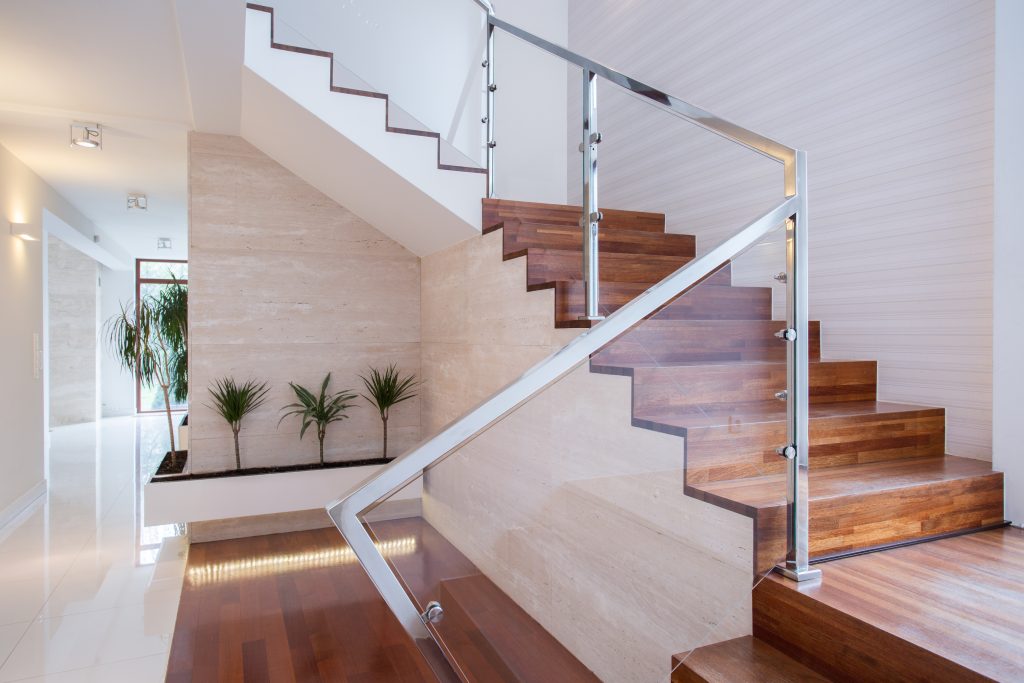
Can Stair Trim Hide a Crooked Wall?
Only to a limited degree. Trim can be scribed to follow minor wall variation, but it cannot make a badly bowed wall straight.
If the wall deviation is large, the better solution may be drywall correction before the finish trim goes in. Otherwise, we end up choosing between a wavy-looking board and a large visible gap.
When Should Baseboards Be Coordinated With Stair Trim?
Baseboards should be planned at the same time as stair trim because the transition between them is highly visible. A tall new baseboard meeting a short old skirt board can create an awkward step in the profile.
We compare height, thickness, reveal, and termination points before cutting either piece. This is especially important at lower landings, upper hallways, and walls where the staircase opens directly into a remodeled room.
Which Stair Trim Materials Work Best?
The best material depends on durability, moisture exposure, finish, budget, and whether the trim will be painted or stained.
| Material | Durability | Moisture Resistance | Repairability | Typical Use |
|---|---|---|---|---|
| Solid wood | High | Moderate when finished | High | Painted or stained stair trim |
| MDF | Good in dry areas | Lower | Moderate | Painted interior trim |
| Moisture-resistant composite | High | High | Varies | Areas near entries or higher moisture |
For stairs that see heavy daily use, material quality and installation matter as much as the profile itself.
Should Stair Trim Be Installed Before Painting?
Yes, final trim installation generally comes before the last paint stage. That allows nail holes, minor joints, and paintable caulk to be finished as part of the final surface work.
Painting too early can create unnecessary touch-ups if trim is still being cut, fitted, or removed.
At Remodel View of Nashville, we prefer to leave final finish work until the carpentry is complete.
What Is the Best Remodeling Sequence for Stair Trim?
The best sequence is one that avoids installing finish carpentry before the surfaces around it are finalized.
A practical order is:
- Complete demolition.
- Repair framing or stair structure if needed.
- Complete drywall repairs.
- Finalize tread, riser, and flooring selections.
- Install stair surfaces and landing flooring as required by the system.
- Install or replace skirt boards and related stair trim.
- Complete baseboard transitions.
- Caulk, fill, sand, and prepare the trim.
- Finish with final paint or stain touch-ups.
This sequence reduces the chance of rework.
When Is Selective Replacement Better Than Replacing Everything?
Selective replacement is better when most of the existing trim is sound and matches the new design. For example, one damaged skirt board may be replaced while other trim stays.
Full replacement makes more sense when profiles cannot be matched, multiple sections are damaged, or the staircase is being visually updated from carpeted to finished wood.
For homeowners considering stair trim in Smyrna, TN, we look at the entire staircase before deciding whether patching or full replacement will produce the cleaner result.
How Does Stair Trim Fit Into a Larger Remodel?
Stair trim often connects directly to flooring, drywall, baseboards, entryway work, and painting. That is why it is easier to coordinate during a larger remodel than after every surrounding finish is already complete.
Remodel View of Nashville handles demolition, delivery, installation, drywall, flooring, cabinets, countertops, and finish work depending on the project scope. When stair work is part of a broader renovation, we can sequence the trim around those other trades.
Are Kitchen Promotions Related to Stair Trim Pricing?
No. Our kitchen promotions are separate from stair trim pricing, but they can be part of the same larger home remodeling project.
Our Kitchen Upgrade From $8,500 INSTALLED includes cabinets and countertop. We use $850 per cabinet as a quick planning estimate within that specific package.
We also offer Complete Kitchen + FREE Vanity From $18,999. With a qualifying complete kitchen remodel on special, homeowners receive a free matching vanity in the same cabinet color with a matching countertop.
These offers do not represent the cost of stair trim work.

FAQ
Should stair trim be replaced before new flooring?
Usually not before the final flooring height is known. The trim should be coordinated with the finished stair and landing surfaces.
Can old skirt boards be reused?
Yes, if they are solid, undamaged, and still fit the new tread and flooring layout.
Should drywall be fixed before stair trim?
Yes, when the wall is damaged or significantly uneven. Minor stable gaps can be handled during finish work.
Can stair trim be installed after painting?
It can, but final trim is usually installed before the last paint stage so joints and nail holes can be finished properly.
Does carpet removal affect stair trim?
Yes. Carpet often hides gaps, rough cuts, and old fastener marks that become visible when the stairs are converted to hardwood.
Can large gaps around stair trim be caulked?
Large gaps should not simply be filled with caulk. The wall, tread fit, or trim geometry should be corrected first.
Is stair trim replacement always necessary during a remodel?
No. Sound trim can often stay if it still fits the new flooring, stair surfaces, and overall design.
Stair Trim Services in Nashville and Smyrna, TN
Remodel View of Nashville serves Nashville, TN and nearby communities, including Smyrna, TN, with remodeling services that can include demolition, delivery, installation, drywall repair, flooring, cabinets, countertops, baseboards, and finish carpentry.
If you are planning stair trim in Smyrna, TN, we can evaluate the existing skirt boards, flooring height, tread and riser condition, drywall, and baseboard transitions before deciding what should stay and what should be replaced. Call 513-790-2770 to discuss the project with our team.