

Moisture damage behind backsplash tile usually starts when water gets through a failed joint, damaged grout, a plumbing leak, or an opening near the sink, countertop, outlet, or wall penetration. The tile face may still look fine while drywall, adhesive, wood, or cabinet material behind it begins to deteriorate.
For homeowners comparing tile installation professionals in Smyrna, TN, the key point is that a backsplash is a system, not just a decorative surface. Tile, grout, caulk, wall preparation, plumbing conditions, and countertop transitions all affect how the area handles repeated moisture.
At Remodel View of Nashville, we look beyond the visible tile because hidden damage often starts at edges, joints, and wall penetrations.
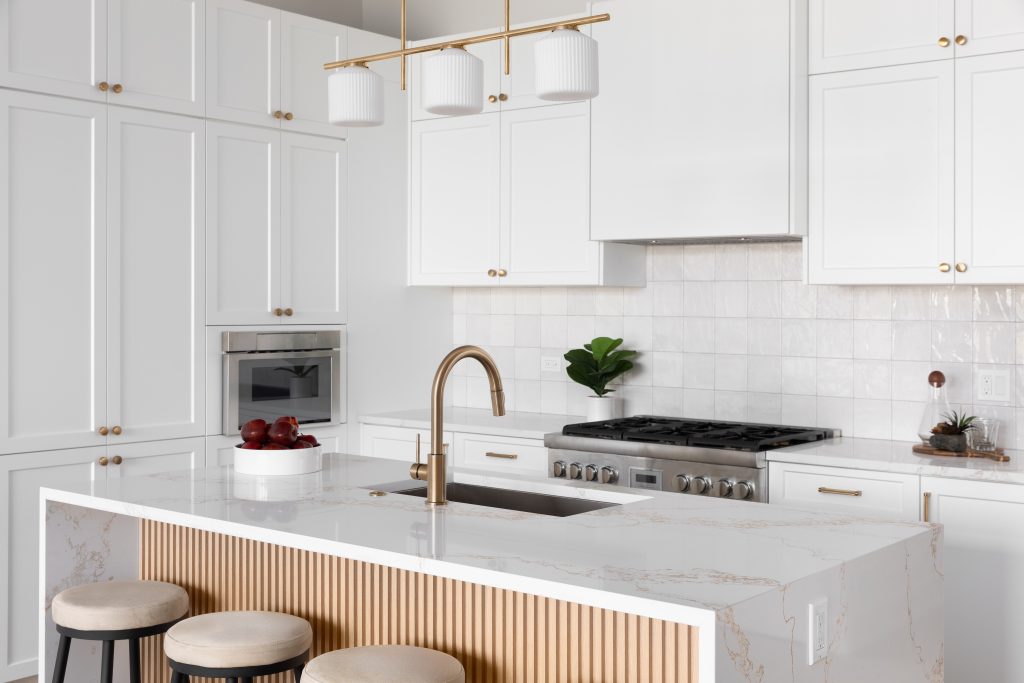
Can Water Get Behind a Kitchen Backsplash?
Yes. Water can get behind a backsplash through cracked caulk, damaged grout, loose tile, open penetrations, or plumbing leaks. The risk is highest around sinks, faucets, countertop joints, and areas that are repeatedly splashed.
A kitchen backsplash does not function like a shower enclosure. In most kitchens, it is designed to handle splashes and routine cleaning, not constant saturation.
Is Grout Waterproof?
No. Cement-based grout can absorb moisture, and sealer does not turn it into a waterproof barrier. Sealer can reduce absorption and staining, but water can still enter through cracked grout or open joints.
This is why tile installation professionals in Smyrna, TN pay close attention to transitions and movement joints instead of relying on grout alone.
Why Does the Countertop-to-Backsplash Joint Fail?
The joint can fail because countertops, cabinets, walls, and tile move slightly at different rates. A rigid grout joint at this transition may crack as the cabinet or countertop system shifts.
A flexible sealant is generally used where different planes or materials meet. If it dries out, separates, or was poorly applied, sink splashes can reach the wall behind the backsplash.
A narrow failed caulk line may look cosmetic, but repeated wet-and-dry cycles can eventually damage the substrate.
Can a Plumbing Leak Cause Damage Behind the Backsplash?
Yes. Supply-line leaks, faucet leaks, drain problems, or water traveling through a nearby wall cavity can create hidden moisture damage even when the tile installation itself is sound.
Possible warning signs include recurring discoloration, swelling near the countertop, loose tile, softened drywall, or a musty odor. If the source is plumbing, resealing the backsplash will not fix it.
At Remodel View of Nashville, we separate the visible repair from the source of the moisture before rebuilding the finish.
Can Sink Splashing Cause Hidden Damage?
Yes. Repeated splashing can become a problem when caulk has failed behind the sink or water is allowed to collect around the faucet and wall joint.
One splash is rarely the issue. The problem is repeated exposure over months or years.
For tile installation professionals in Smyrna, TN, the sink area deserves special attention because it receives more recurring moisture than most kitchen walls.
What Happens If Drywall Gets Wet Behind Tile?
Wet drywall can soften, lose surface strength, and stop providing a reliable bond for tile. If moisture continues, the tile may loosen even though the surface still looks mostly intact.
Not every damp area requires complete wall replacement. The decision depends on how much material was affected, how long it stayed wet, and whether the water source has been stopped.
Soft, swollen, crumbling, or weakened drywall should be corrected before tile is reinstalled.

What Are the Most Common Causes of Moisture Behind a Backsplash?
The most common causes are failed joints, plumbing leaks, repeated sink splash, damaged grout, and poor wall preparation.
| Cause | Common Sign | Why It Matters | Typical Response |
|---|---|---|---|
| Failed countertop joint | Cracked or missing caulk | Water can run behind tile | Dry, repair, and reseal |
| Plumbing leak | Recurring dampness | Moisture continues behind finish | Repair plumbing first |
| Damaged grout | Cracked or dark joints | Water can enter open areas | Evaluate grout and substrate |
| Loose tile | Movement or hollow sections | Bond may be compromised | Remove affected tile and inspect |
| Poor wall preparation | Repeated loose tile | Substrate may be unstable | Repair wall before reinstalling |
The visible grout line is not always the real problem. We often need to determine what is happening underneath it.
Do Different Backsplash Materials Handle Moisture Differently?
Yes. Porcelain and glazed ceramic resist surface moisture well, while natural stone may be more porous and require material-specific care.
| Material | Durability | Moisture/Stain Behavior | Maintenance |
|---|---|---|---|
| Porcelain | High | Very low tile-face absorption | Maintain grout and caulk |
| Glazed ceramic | Good | Glazed face resists moisture | Routine cleaning, joint maintenance |
| Marble | Moderate | More stain-sensitive, acid-sensitive | Stone-safe cleaning, sealing when appropriate |
| Travertine | Moderate | More porous, especially in pits | Stone-safe care, sealing when appropriate |
Even low-absorption tile cannot compensate for a failed countertop joint or an active leak.
Can Moisture Damage Be Fixed Without Replacing the Entire Backsplash?
Sometimes. If the problem is localized and the surrounding wall remains sound, only a limited section may need to be removed.
A practical repair sequence is:
- Find and stop the moisture source.
- Remove enough tile to inspect the affected wall.
- Allow damp materials to dry.
- Replace damaged drywall or backing material if needed.
- Reinstall tile on a stable surface.
- Finish grout and movement joints correctly.
For tile installation professionals in Smyrna, TN, correcting the source before reinstalling tile is the part that prevents the same problem from returning.
When Is Regrouting Not Enough?
Regrouting is not enough when the wall is wet, tile is loose, drywall has deteriorated, or an active leak is present. New grout over a damaged substrate only covers the symptom.
Regrouting makes sense when the tile is securely bonded and the problem is limited to old or deteriorated grout. If the wall itself has been compromised, the substrate needs attention first.
Can Moisture Damage Affect Cabinets and Countertops?
Yes. Water that travels behind a backsplash can move toward countertop edges, cabinet backs, sink bases, and wall framing.
Some engineered cabinet materials can swell when exposed to ongoing moisture. A stone countertop may tolerate water well, but the cabinet system supporting it can still be damaged by a leak.
This is why we coordinate tile, cabinetry, countertops, and light plumbing as connected parts of the same kitchen.
What Should Be Checked Before New Backsplash Tile Is Installed?
The wall should be dry, stable, reasonably flat, and free of unresolved leaks before new tile goes up. Countertops, cabinets, outlets, and plumbing conditions should also be far enough along to establish accurate cuts and transitions.
We typically check:
- Wall condition and flatness
- Old moisture damage
- Sink and faucet area
- Countertop-to-wall joint
- Outlet and switch locations
- Loose or damaged drywall
- Cabinet and countertop alignment
- Nearby plumbing issues
At Remodel View of Nashville, demolition, delivery, and installation can be coordinated so the backsplash is not installed before the surrounding work is ready.
How Much Can a Kitchen Remodel Cost?
Cost depends on cabinet count, countertop material, demolition, delivery, installation, backsplash work, and repairs found after existing finishes are removed.
Our KITCHEN UPGRADE FROM $8,500 INSTALLED includes cabinets and countertop. For quick planning, the offer uses $850 per cabinet, but that figure applies to this specific kitchen-upgrade offer and is not a universal cabinet price.
We also have a separate COMPLETE KITCHEN + FREE VANITY FROM $18,999 offer. With a qualifying complete kitchen remodel on special, the homeowner receives a free matching vanity in the same cabinet color with a matching countertop.
These are separate kitchen offers. Moisture repair or backsplash work depends on the actual condition and scope of the project.
Why Does Professional Installation Matter Around Wet Areas?
Professional installation matters because the tile face is only one part of moisture control. At Remodel View of Nashville, we also consider the condition of the wall and surrounding kitchen components before closing the area back up.
Wall preparation, cuts, joints, sealant, and the connection to the countertop all affect long-term performance.
For homeowners searching for tile installation professionals in Smyrna, TN, it is worth asking how the installer handles sink-area joints, damaged drywall, existing leaks, and transitions between tile and countertops.
A straight grout line will not solve moisture entering behind the wall.

FAQ
Can water behind a backsplash cause mold?
Persistent moisture can support mold growth on suitable materials. The moisture source should be corrected and affected materials evaluated.
Is grout waterproof?
No. Grout can absorb moisture, and sealer does not make it completely waterproof.
Should the joint between the backsplash and countertop be caulked?
A flexible sealant is generally appropriate at changes of plane because rigid grout can crack when surfaces move.
Can wet drywall behind tile be repaired?
Yes, when damage is limited. Soft or significantly deteriorated drywall should be replaced before tile is reinstalled.
Why does backsplash grout keep cracking near the countertop?
Movement between cabinets, countertops, walls, and tile can repeatedly crack a rigid joint.
Can one loose backsplash tile be replaced?
Often, yes. We still check why it loosened, especially near sinks or other wet areas.
Do I need to replace the whole backsplash after a leak?
Not always. Localized repair may be possible if the surrounding tile and substrate remain sound.
Backsplash and Tile Installation in Nashville and Smyrna, TN
Remodel View of Nashville serves Nashville, TN and nearby communities, including Smyrna, TN, with kitchen remodeling, backsplash and tile installation, demolition, delivery, cabinet installation, countertop installation, and related light plumbing coordination.
If you are comparing tile installation professionals in Smyrna, TN, we can inspect the existing backsplash area and determine whether the project needs localized repair, demolition, wall preparation, or a new installation. Call 513-790-2770 to discuss your kitchen project.