
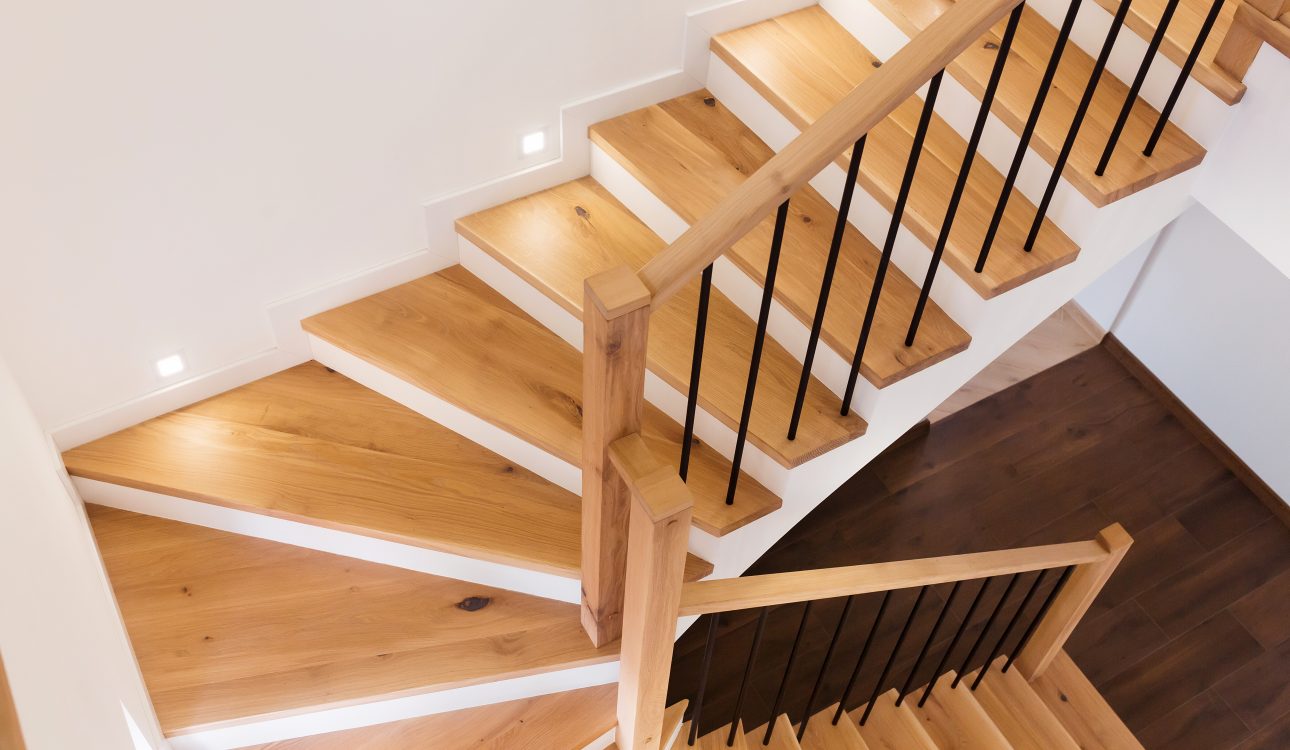
Stairs are the one feature in a home that almost never gets a day off. People run up them late for work. They carry laundry down them half-asleep. Kids slide their hands along the wall. Pets cut corners with sharp nails. Furniture scrapes the edges during moves. And all that daily traffic leaves its signature in one place faster than anywhere else: the trim.
Stair trim is not just decoration. It is the frame that makes stairs look finished, clean, and intentional. When it is chipped, gapped, or patched poorly, the entire staircase can feel tired, even if the rest of the house is updated. That is why homeowners looking at stair trim in Nashville, TN often reach the same decision point: do we repair what is there, or do we replace it entirely?
At Remodel View of Nashville, we see this question constantly, especially in homes where floors have been updated, walls have been repainted, and the staircase is suddenly the one element that still looks like the “before.” The right answer depends on what is actually happening to the trim. Some problems are cosmetic and easy to fix well. Others are signs that the trim is failing as a system and repairs will keep coming back.
The smartest approach is not guessing. It is reading the clues the staircase is already giving you.

Why stair trim fails in the first place
Stair trim lives in a high-impact zone. Even a careful household will scuff it because stairs funnel motion through narrow spaces. The most common damage patterns usually come from three sources: impact, movement, and moisture.
Impact is obvious. Corners get dinged. The lower portion of skirt boards takes kicks and vacuum hits. The trim near landings gets scraped by anything bulky being carried up or down.
Movement is quieter but just as important. Homes shift slightly with seasons. Wood expands and contracts. Staircases in older homes are rarely perfectly square, and those small irregularities show up as gaps where the skirt board meets the wall or where caulk lines keep cracking.
Moisture can also play a role, especially near entry staircases or basements. Humidity changes can cause paint to fail and can weaken older materials over time.
Understanding these causes matters because it determines whether stair trim in Nashville, TN can be repaired cleanly or whether replacement is the smarter, longer-lasting move.
Remodel View of Nashville treats stair trim as part of the overall finish system of a home. When it looks rough, it is often because the system needs attention, not because one corner got unlucky.
When stair trim repair is enough
Repair is the right choice when the trim is structurally sound and the issues are limited. In practical terms, that means the trim is still firmly attached, not warped, and not swollen or soft.
If the damage is mostly surface-level, repair can bring the staircase back quickly. Scuffs, small dents, minor chips, and paint wear often fall into this category. These issues can be filled, sanded, and repainted so they blend smoothly. If the trim profile is consistent and the joints are still tight, a repair can make the stairs look new again without tearing anything out.
Repair also makes sense when the gaps are small and stable. Many staircases develop hairline separation where trim meets wall due to seasonal movement. If the movement is mild, re-caulking and repainting can restore a crisp line. The key is stability. If the same gaps reappear quickly after repair, that is no longer a simple cosmetic issue.
Another strong case for repair is when the home has older trim profiles that are difficult to match. Many older Nashville homes have details that are not standard today. In those cases, preserving the original trim with careful repair can keep the house feeling consistent. Replacing only part of a staircase with a modern profile can look patched and mismatched, even if the installation is technically good.
This is why stair trim in Nashville, TN often benefits from a repair-first approach when the goal is to preserve character. Remodel View of Nashville frequently repairs existing trim in older homes when the underlying material is still solid and the profile is worth keeping.
The red flags that mean repair will turn into a money pit
There are clear signs that repairs will not hold. When you see them, replacing the trim often saves money and frustration.
One red flag is repeated caulk cracking along long runs, especially where the skirt board meets the wall. If you have re-caulked and repainted and the line keeps splitting, the trim may be moving because it was never properly secured, or the wall surface is shifting, or the cuts were not clean enough in the first place. You can keep patching, but you will keep paying for the same problem.
Another red flag is warping or separation that changes the shape of the trim. If the skirt board has pulled away, bowed, or developed uneven lines, it is hard to “repair” that into a clean look. You may be able to hide it temporarily, but it will continue to read as off because the trim is no longer straight.
Soft or swollen trim is another sign that replacement is the smarter option. Paint might hide swelling at first, but you will feel it if you press gently and the material gives. That type of damage usually means moisture exposure or material breakdown. Patching over it is like painting over rot. It does not create strength.
You may also see damage that suggests the trim was installed poorly from the beginning: uneven reveals, inconsistent nail patterns, joints that were never tight, or filler strips that look like last-minute fixes. In those cases, stair trim in Nashville, TN can look “cheap” even after repair because the geometry is wrong. Replacement allows the trim to be re-installed with proper alignment and proportions.
Remodel View of Nashville often tells homeowners that the goal is not to hide flaws. The goal is to reset the staircase so it looks intentional and stays that way.
Flooring changes often push the decision toward replacement
One of the most common reasons stair trim suddenly looks bad is not because it changed. It is because the rest of the house improved.
New floors make old trim look tired. New paint makes old caulk lines obvious. A flooring change can also create height transitions that expose gaps or leave uneven edges at the base of the skirt board.
If you have recently updated flooring, the staircase becomes a visual bridge between levels. If the trim is worn or mismatched, the whole transition looks less finished. This is why stair trim in Nashville, TN is often addressed during flooring projects, even if it was not on the original plan.
In some cases, flooring replacement makes repair harder. Removing and reinstalling trim can crack older pieces, and older trim can splinter during removal. If the trim is already damaged, you can end up paying for repair work that still cannot match the clean look of new floors.
Remodel View of Nashville often recommends replacement when flooring changes have exposed multiple issues at once. Not because repair is impossible, but because replacement becomes the cleaner, more efficient path to a cohesive result.
Paint and finish quality can hide problems, but only for so long
Many homeowners want to repair because they assume paint can fix anything. Paint helps, but paint is not structure. If the trim has real gaps, loose sections, or movement issues, paint will only disguise them temporarily.
The same is true for heavy caulk lines. Thick caulk can hide uneven edges, but it often creates a rounded, messy look that makes the staircase feel less crisp. A premium staircase finish usually has sharp lines and tight joints, not thick seams.
The difference between a staircase that looks “refreshed” and a staircase that looks “professionally finished” usually comes down to the underlying fit. That is why the repair versus replacement decision for stair trim in Nashville, TN should be based on the condition of the trim, not on how much paint you are willing to apply.
Remodel View of Nashville focuses on fit first. When the fit is right, the paint finish becomes simple. When the fit is wrong, paint becomes a constant battle.
Replacement does not have to mean changing the style
Some homeowners avoid replacement because they fear it will change the look of their home. In reality, replacement can be done in a way that respects the existing style.
If the rest of your trim is traditional, stair trim can match it. If the home is more modern, stair trim can be simplified. Replacement gives you a chance to correct proportions, clean up lines, and create a staircase that feels like it belongs.
Replacement is also an opportunity to fix the parts that bother homeowners most: uneven edges, visible gaps, clumsy transitions at landings, and awkward intersections near posts and railings. A good replacement job can make stairs feel cleaner and more solid without turning them into a “feature project” that dominates the home.
This is where Remodel View of Nashville brings value. We look at stair trim in Nashville, TN as part of the whole home aesthetic. The goal is not to over-design it. The goal is to make it look finished and consistent.
A practical way to decide without overthinking
If you want a simple decision framework, think about three things: condition, repetition, and visibility.
Condition is whether the trim is still solid. If it is warped, soft, or pulling away, replacement is usually smarter.
Repetition is whether the problems keep coming back. If you repair the same gaps and chips again and again, you are paying for a cycle, not a solution.
Visibility is whether the staircase is a focal point. If the stairs are in a main entryway or open hallway, flaws will be noticed more. Repair may still work, but replacement may deliver more value because the staircase affects the whole first impression.
This framework helps homeowners decide whether stair trim in Nashville, TN should be refreshed or reset. Remodel View of Nashville uses the same thinking because it keeps the decision grounded in real outcomes.

What saves money long-term is the option that stops repeat work
Repair can be a great value when the trim is healthy. Full replacement becomes the better value when the trim is failing and repairs will keep reappearing.
Homeowners often think replacement is always the more expensive option. But if repairs need to be repeated, replacement can actually be cheaper over time. More importantly, it stops the cycle of seeing the same flaws again and again, which is the real frustration.
Remodel View of Nashville helps homeowners make that call with honesty. Remodel View of Nashville approaches stair trim in Nashville, TN with a goal of durability and clean finish, not quick cosmetic cover-ups. Remodel View of Nashville also understands how stair trim interacts with flooring, paint, and home style, which is why the result looks cohesive rather than patched. If the trim is still strong, a careful repair can make it look new. If it is failing, replacement is often the most direct path to a staircase that finally feels finished.
In the end, the right choice is the one that makes your stairs look clean today and stay clean tomorrow.